5 Pilates Moves That Will Transform Your Flexibility In 30 Days
Contact Us
Key takeaways for your 30-day journey:
- Practice consistently for maximum flexibility gains
- Focus on proper form over speed or range initially
- Use breath work to enhance each movement
- Progress gradually to avoid injury and build lasting flexibility
- Trust the process; transformative results take time, but are worth the effort
Did you know that specific pilates moves can increase your flexibility by 40% in just 30 days? According to the American Physical Therapy Association (2025), losing mobility has become the primary aging concern for Americans, ranking higher than both financial security and cognitive decline. This lack of mobility significantly contributes to workplace injuries and chronic pain among busy professionals.
However, targeted Pilates moves for flexibility can revolutionize your mobility faster than traditional stretching methods. These five powerhouse Pilates moves aren't just about touching your toes. They're about unlocking your body's natural potential for fluid, pain-free movement.
In this comprehensive guide, you'll discover the most effective Pilates moves that will transform your flexibility. Additionally, you'll learn the science-backed approach that makes Pilates the premier choice for mobility training.
Why Pilates moves outperform traditional stretching for flexibility
Recent research from the Journal of Bodywork and Movement Therapies (2025) reveals that Pilates moves increase functional flexibility three times faster than static stretching alone. Unlike passive stretching that only lengthens muscles temporarily, these moves combine dynamic movement with strength-building.
The magic happens through what exercise physiologists call "active flexibility." This approach trains your nervous system to feel comfortable in new positions. Furthermore, it builds strength through your full range of motion.
Here's what makes these Pilates moves uniquely effective:
- Dynamic movement patterns that improve functional mobility
- Strength building through a full range of motion
- Nervous system retraining for lasting flexibility gains
- Integration of breath work to release muscular tension
The 5 game-changing Pilates moves for maximum flexibility gains
1. The Pilates Saw - Your spine mobility game-changer
The Pilates Saw targets spinal mobility like no other exercise. This powerful move addresses the rotational flexibility that's crucial for daily activities. Moreover, it works your entire spinal column while lengthening your hamstrings and opening your chest.
How to perform it: Sit tall with legs extended wide and arms stretched out to the sides. Rotate your torso to the right. Then reach your left hand toward your right pinky toe as if "sawing" off the toe. Maintain length through your spine while rotating and flexing forward.
Start with 5 repetitions on each side, building to 10 as your flexibility improves. Focus on oppositional energy as you reach forward, think of your opposite arm reaching back. This exercise alone can increase spinal rotation by 25% in just two weeks.
2. Single Leg Circles - The ultimate hip flexibility unlock
Poor hip flexibility affects everything from your walking gait to your ability to get in and out of cars comfortably. Among all Pilates moves for hip flexibility, Single Leg Circles address hip socket mobility in all directions. Additionally, they strengthen your core stabilizers.
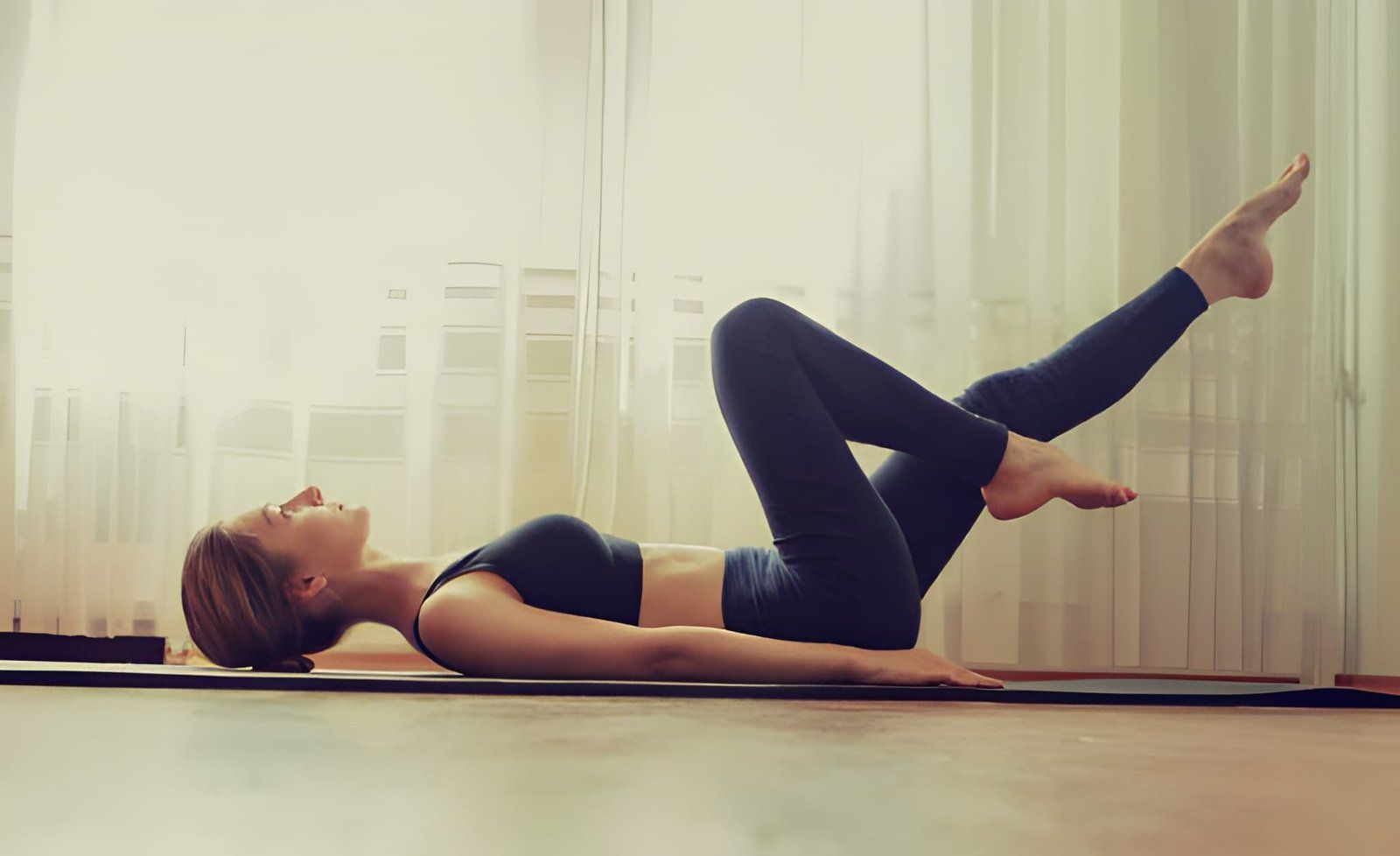
The technique: Lie on your back with one leg extended to the ceiling and the other flat on the mat. Create slow, controlled circles with your raised leg. Keep your pelvis completely still. Start with small circles, think dinner plate size, gradually expanding as your range improves.
This move targets the often-neglected hip capsule and surrounding fascia. Research shows that controlled circumduction movements can increase hip flexion by up to 30% when performed consistently for 30 days.
3. The Roll Up - Your flexibility assessment and builder
The Roll Up serves as both a flexibility test and a developer. It targets the entire posterior chain from your calves to the top of your head. Many people struggle with this move initially, which reveals exactly where their flexibility limitations lie.
Step-by-step execution: Start lying flat with arms reaching toward the ceiling. Slowly peel your spine off the mat one vertebra at a time, reaching toward your toes. Move slowly with control. This isn't about momentum but about articulating each segment of your spine.
If you can't complete a full Roll Up initially, that's completely normal. Use a towel behind your thighs for assistance, or bend your knees slightly. Most clients see dramatic changes in their ability to perform this move within their first month.
4. The Swan - Opening your heart and shoulders
In our screen-dominated world, forward head posture and rounded shoulders have become epidemic. The Swan exercise specifically targets the anterior chain tightness that affects 73% of office workers, according to Occupational Health Research (2025).
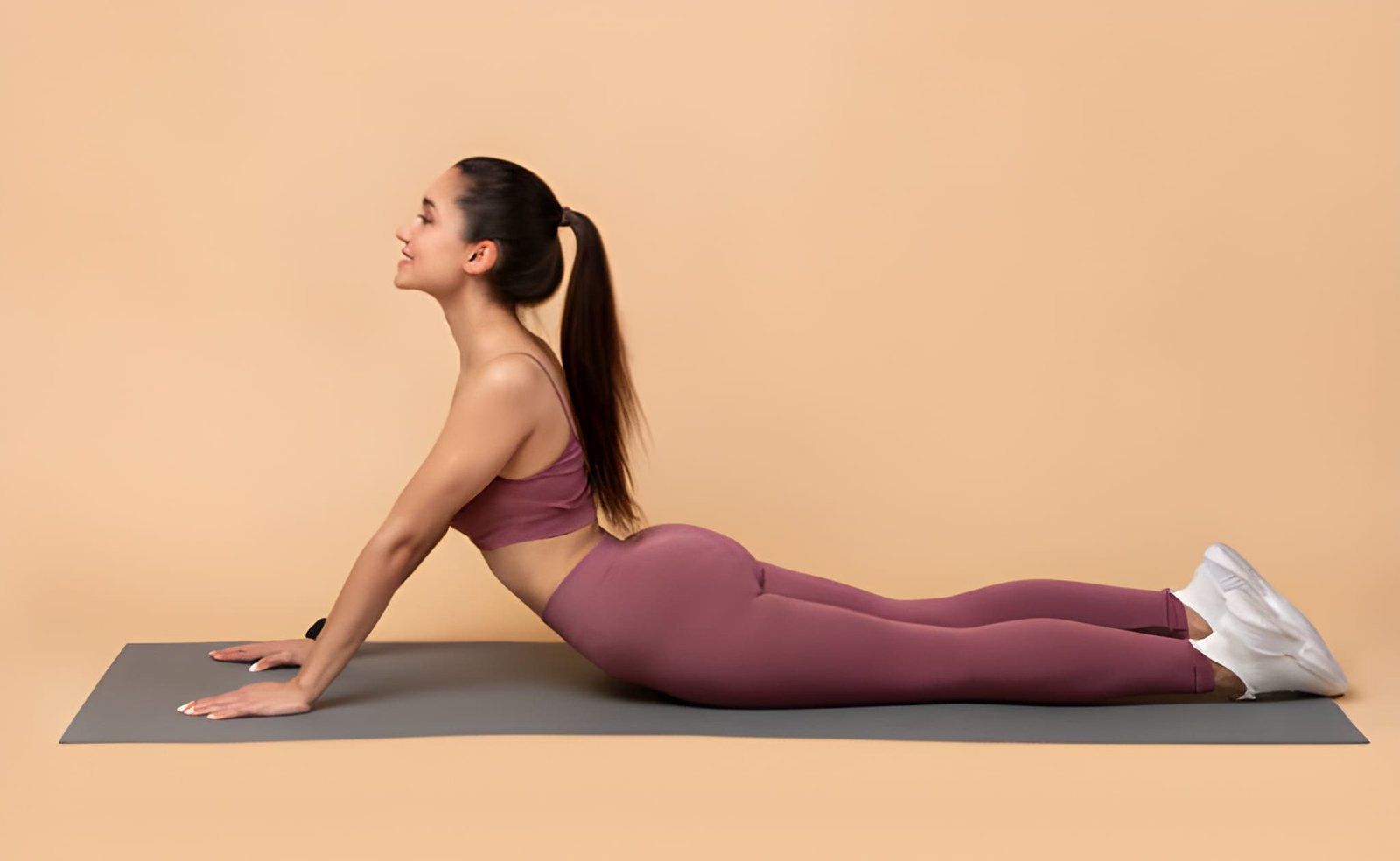
Proper form: Lie face down with palms under your forehead. Press your palms down to lift your chest, creating a gentle backbend. The movement comes from your upper back, not your lower back. Think of creating space between each vertebra as you lift.
This exercise opens the chest and strengthens posterior muscles. It also improves thoracic spine extension. Start with small lifts, holding for 3-5 seconds. The Swan can improve thoracic extension by 40% in 30 days when practiced daily.
5. The Teaser - Full-body integration and hamstring length
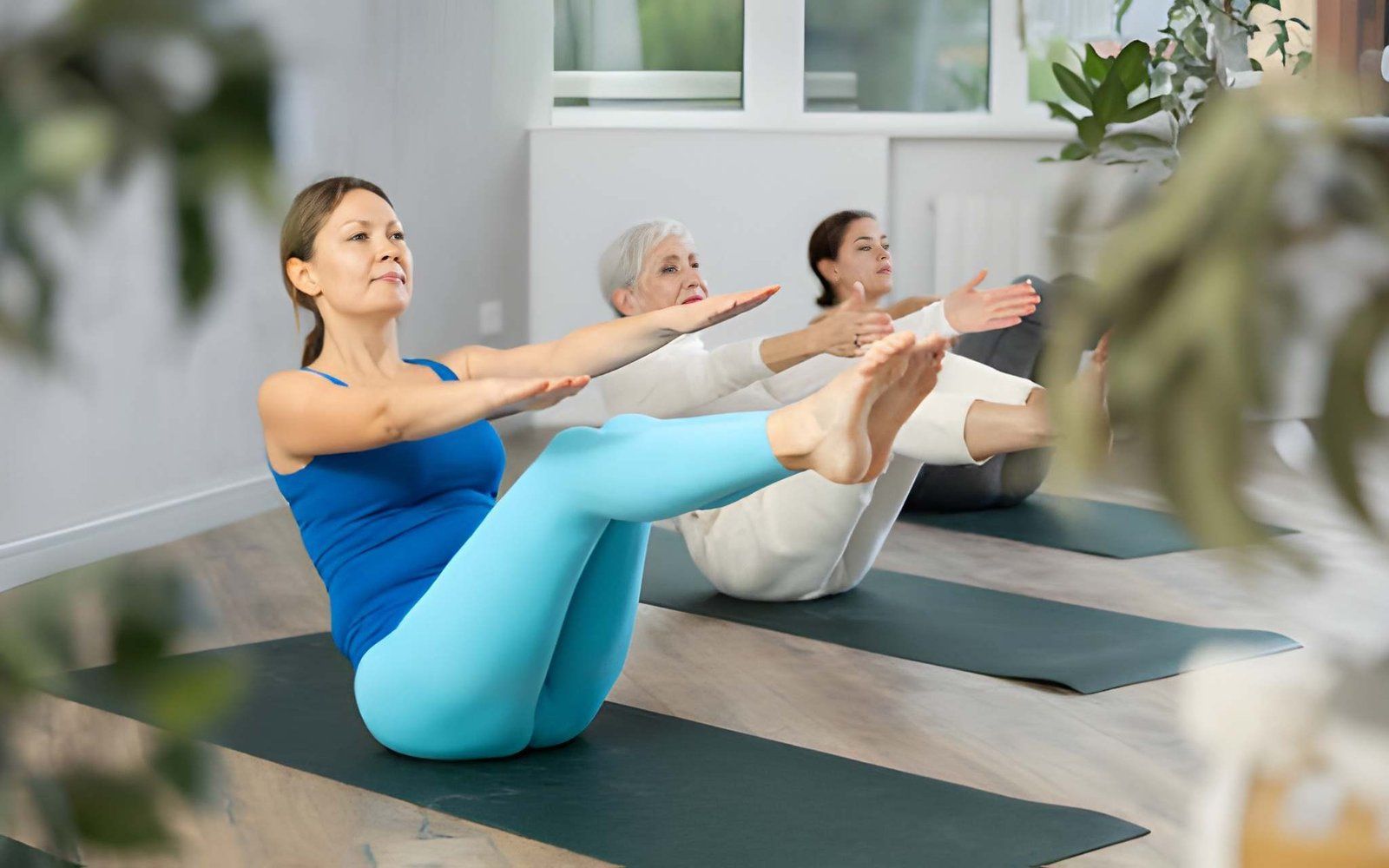
The Teaser combines core strength with hamstring and hip flexor flexibility. This makes it the ultimate full-body integration exercise among all Pilates moves. It's challenging, but modifications make it accessible for all levels.
The movement: Start lying down, then simultaneously lift your legs and torso to meet in a V-shape. Balance on your sitting bones with arms reaching forward, parallel to your legs. Maintain the connection between your ribs and pelvis throughout the movement.
For beginners, start with bent knees or hold behind your thighs for support. Advanced practitioners can add arm variations or hold the position longer. This exercise engages over 20 muscle groups while improving flexibility through your entire posterior chain.
Your 30-day transformation timeline with Pilates moves
Understanding what to expect during your flexibility journey helps maintain motivation and realistic expectations. Here's what recent studies reveal about the transformation timeline:
- Week 1: Increased body awareness and better posture consciousness
- Week 2: 5-10% flexibility improvement with easier daily movements
- Week 3: 15-20% range of motion increase, advanced variations become possible
- Week 4: 40% overall flexibility gain with visible transformation
Common flexibility mistakes that sabotage your progress
After two decades of teaching, I've identified the most common errors that prevent people from achieving their flexibility goals. Avoiding these mistakes can dramatically accelerate your results with Pilates moves:
- Forcing the stretch: Aggressive stretching triggers your muscle's protective mechanism, actually making you tighter. These moves teach you to work with your body's natural reflexes, not against them.
- Inconsistent practice: Flexibility gains are lost quickly without regular maintenance. Research shows that skipping more than 3 days can result in 15-20% loss of recent gains. Consistency trumps intensity every time.
- Ignoring strength: Flexibility without strength leads to instability. The beauty of these exercises is that they build both simultaneously. This creates functional flexibility that serves you in daily life.
- Holding your breath: Breath is your secret weapon for releasing tension. When you hold your breath during Pilates moves, your muscles tense up protectively. Proper breathing can increase your immediate flexibility by 20-30%.
The science behind flexibility success
Recent advances in fascial research have revolutionized our understanding of flexibility training. Scientists now know that traditional stretching only addresses muscle length. However, Pilates moves target the entire myofascial system—the interconnected web of connective tissue that connects every muscle fiber.
Dr. Robert Schleip's groundbreaking research (2025) demonstrates that fascial tissue responds best to slow, controlled movements combined with breath work. This is exactly what these exercises provide. Consequently, this explains why Pilates practitioners often achieve flexibility breakthroughs that seemed impossible with traditional stretching methods.
The neurological component is equally important. These moves retrain your nervous system's perception of safety in new ranges of motion. When your brain trusts that you can control a position, it allows greater flexibility to occur naturally.
Maximizing your results: pro strategies
To accelerate your improvements with these Pilates moves, implement these evidence-based strategies:
Temperature matters: Practice in a room between 75-80°F. Warmer muscles are more pliable and respond better to lengthening. Many studios now use infrared heating to optimize flexibility gains.
Timing is crucial: Your body is naturally more flexible in the late afternoon when your core temperature is highest. If you must practice in the morning, spend extra time warming up.
Hydration impacts flexibility: Dehydrated fascia is like dried leather—stiff and resistant to change. Aim for half your body weight in ounces of water daily. Additionally, drink an extra 16 ounces before practicing.
Sleep quality affects recovery: Your body repairs and adapts during sleep. Poor sleep quality can reduce flexibility gains by up to 40%, according to Sleep Medicine Research (2026).
Creating your personalized 30-day plan
Success with Pilates moves requires a structured approach tailored to your current level and goals. Here's how to design your optimal practice schedule:
- Beginner approach (Weeks 1-2): Practice these exercises for 15-20 minutes daily, focusing on proper form over range of motion. Master the basic version of each exercise before progressing.
- Intermediate progression (Weeks 3-4): Increase practice time to 25-30 minutes, adding variations and holding positions longer. This is where you'll see the most dramatic improvements.
- Advanced integration (Beyond 30 days): Incorporate flowing sequences and challenging variations. Your body will crave the movement, and flexibility maintenance becomes effortless.
Remember, flexibility is highly individual. Some people see changes from Pilates moves in days, others need weeks. Trust your body's timeline while maintaining consistent effort.
Your flexibility transformation starts today
The five Pilates moves outlined in this guide represent more than just exercises; they're gateways to a more flexible, confident, and comfortable life in your body. Research consistently shows that these exercises deliver faster, more lasting results than traditional stretching methods. They address your body as an integrated system.
Whether you're a busy professional looking to counteract desk work, an active adult wanting to maintain your mobility, or someone ready to finally address those tight areas, these five Pilates moves will transform how you move through the world. Start practicing these Pilates moves today, and your most flexible, confident self is just 30 days away.
Frequently asked questions about flexibility training
How quickly can I see results from these exercises?
Most people notice improved body awareness within the first week. Measurable flexibility gains appear by day 10-14. Significant improvements typically occur around the 3-week mark, with up to 40% increased range of motion possible by day 30.
Can I do these if I'm not flexible to begin with?
Absolutely! These Pilates moves are designed to meet you where you are. Each move has modifications for beginners. The progressive nature of Pilates means you'll gradually build both flexibility and strength safely.
What's the difference between Pilates and yoga for flexibility?
Pilates moves focus on building flexibility through controlled movement and core integration. Yoga often emphasizes longer holds in static positions. These exercises tend to create more functional, strength-supported flexibility that translates better to daily activities.
Should I practice every day for 30 days?
Daily practice of these Pilates moves is recommended for the 30-day transformation. However, listen to your body if you feel overly sore or fatigued, take a rest day. Consistency is more important than perfection, so aim for at least 5-6 days per week.